Why Do Grocery Stores Sell CBD Next to Vitamins Now?
CBD has moved from specialty shops and dispensaries into a more familiar aisle: the one with vitamins, protein powders and herbal supplements. That shift can make the products seem ordinary. But a grocery-store shelf does not, by itself, tell you whether a CBD product is well tested, appropriate for you or likely to do what its label suggests.
The short answer is that CBD has become part of mainstream wellness retail. A change in federal hemp law opened the door to a wider market, shoppers began looking for non-intoxicating hemp products, and retailers started treating CBD like other packaged wellness goods. The longer answer involves product types, lab reports, drug-testing concerns and a few important limits on what “legal” or “THC-free” means.
What changed after the 2018 Farm Bill?
The 2018 Farm Bill removed hemp from the federal list of controlled substances, defining hemp in part by its delta-9 THC concentration: no more than 0.3% by dry weight. That distinction helped create a much larger market for hemp-derived products, including CBD. It did not mean every CBD product was automatically approved by federal regulators, legal in every circumstance or suitable for every health claim.
The Food and Drug Administration (FDA) still regulates products according to how they are marketed and used. CBD sold as a supplement or added to food raises regulatory questions, and the FDA has not approved CBD as a general-purpose dietary supplement. Rules can also vary by state and product type. In other words, federal hemp law helped CBD enter more retail channels, but it did not turn every bottle on a shelf into a vetted medicine.
Why grocery retailers are interested
For stores, CBD fits into a broader expansion of wellness products. Shoppers already browse shelves for vitamins, sleep aids, topical creams and products aimed at stress or recovery. CBD brands often package and describe their goods in a similar way, making them easier to place in a conventional wellness section than in a specialty counter.
That retail shift is part of the mainstream wellness CBD story: CBD is increasingly presented as a routine consumer purchase rather than a niche product. Retailers may see demand from people who want to compare labels in person, pick up a topical balm with their usual shopping or avoid ordering from an unfamiliar website. For brands, grocery and pharmacy shelves can mean more visibility and access to new customers.
These CBD retail trends do not prove that CBD treats a health condition. They show that retailers believe consumers are interested in hemp-derived wellness products. Shelf placement is a business decision, not a scientific endorsement.
CBD product types: isolate, broad-spectrum and full-spectrum
CBD is short for cannabidiol, one of the many compounds found in cannabis and hemp. Labels commonly describe products as isolate, broad-spectrum or full-spectrum. These terms refer to the mix of compounds the manufacturer says is in the extract, not to a guarantee of quality or a measure of effectiveness.
Label term What it generally means What to check CBD isolate An extract intended to contain CBD alone, rather than a range of hemp compounds. Whether a batch report confirms the cannabinoid content and screens for contaminants. Broad-spectrum CBD An extract that may contain CBD and other hemp compounds, with THC removed or intended to be removed. Whether the report shows THC was not detected, and what the lab’s detection limit was. Full-spectrum CBD An extract that may contain CBD, other hemp compounds and some THC within the product’s applicable legal limits. The reported THC amount per serving and per container, not just the words “hemp extract.”Definitions can vary between brands, so the product’s actual ingredient list and lab results matter more than the front-label term. “Broad-spectrum,” for example, is not a universal guarantee that no THC is present. Manufacturing variation and testing limits matter, too.
What is the entourage effect?
The entourage effect is the idea that compounds found together in cannabis—such as cannabinoids and aromatic compounds called terpenes—may influence one another’s effects. Put simply, it is a proposed “whole mixture may act differently from one ingredient alone” idea. It is not proof that a full-spectrum product works better than an isolate, or that a particular product will deliver a specific benefit. Research is still developing, and marketing often states the concept with more certainty than the evidence supports.
Why do shoppers ask for THC-free products?
Some consumers want CBD without THC because they do not want an intoxicating effect or because they are concerned about workplace or other drug testing. That concern is reasonable, but “THC-free” should not be treated as a promise of zero risk.
Many drug tests look for THC metabolites, not CBD. A product containing THC could contribute to a positive result, especially with repeated use, higher exposure or differences in how a person processes compounds. Products can also contain more THC than their labels suggest, or trace amounts that a test may detect. Even a broad-spectrum product marketed as THC-free may not eliminate that possibility.
If drug testing has serious consequences for you, the safest choice is to avoid CBD products that may contain THC—and to discuss the risk with the testing program or a health professional rather than relying on a label alone. No CBD format can guarantee a negative drug test.
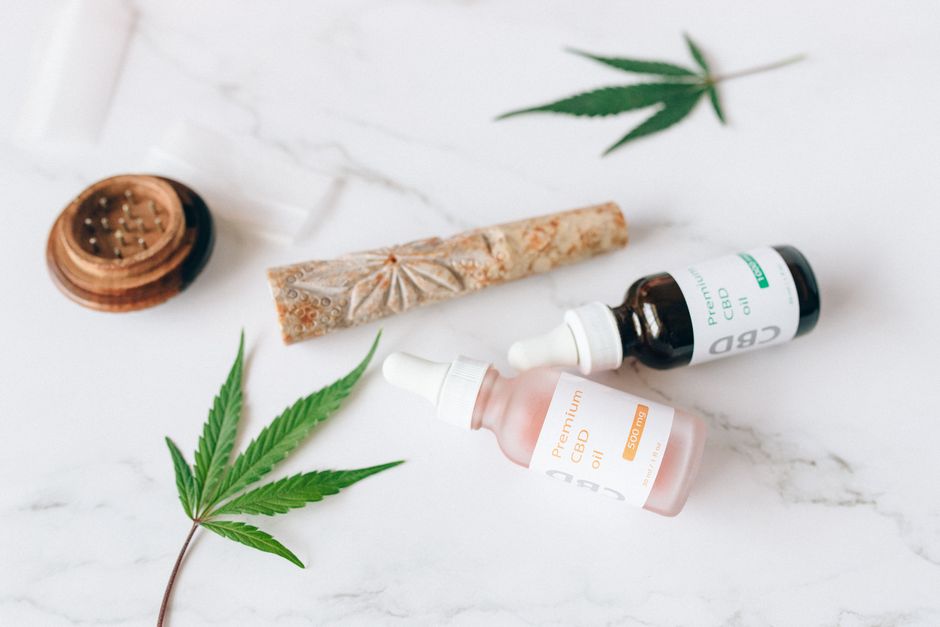
How to check a CBD product before buying
A certificate of analysis, or COA, is a lab report showing results for a tested sample. The important word is batch-specific: the report should match the exact batch or lot number on the package you are considering. A generic COA for a different product or an old batch is not much help.
Use this quick checklist in the store or at home:
- Match the batch number. Compare the lot number on the label with the number on the COA. If they do not match, ask the company for the correct report.
- Check who tested it. Look for the name of the independent laboratory and a report date. If the lab’s relationship to the brand is unclear, ask the company about its testing process.
- Review cannabinoid results. The report should show CBD and THC results, ideally in a way you can compare with the label’s amount per serving and per container.
- Read the detection limit. “Not detected” means the lab did not detect the compound at its test’s sensitivity. It does not automatically mean absolute zero.
- Look for contaminant testing. Depending on the product and process, testing may include pesticides, heavy metals, residual solvents, microbes or other contaminants.
- Check the full ingredient list. Flavorings, carrier oils and other added ingredients matter, especially if you have allergies or sensitivities.
- Be wary of sweeping health claims. Promises to cure, prevent or treat diseases are a reason to pause, not a reason to buy.
Why lab testing and refinement steps matter
CBD products are made through multiple steps, and the details can affect what ends up in the bottle. Hemp may be extracted using different methods; the resulting extract may then be filtered, concentrated or refined to change its cannabinoid profile. Manufacturers aiming for broad-spectrum CBD, for instance, may use additional processing intended to remove THC. The exact methods and their results vary by producer.
Testing can help verify what is in the finished product and screen for certain unwanted substances. But a lab report is only useful if it is tied to the product batch, covers relevant tests and is presented clearly. A statement such as “third-party tested” without an accessible, current report leaves shoppers with little way to check the claim.
Refinement does not automatically make a product purer, safer or more effective. Nor does a clean report prove that CBD will help with a particular symptom. Testing is a quality-control tool, not a clinical trial.
What the grocery shelf does—and does not—tell you about price
Some online articles and scraped shopping pages show product names without prices. When no price is listed, it is not responsible to guess or claim that a product is cheap, premium or a better value. Prices bocaratontribune.com can change by retailer, location, promotion and package size.

To compare value, check the current shelf or checkout price and calculate the cost per milligram of CBD. Also compare serving size, total CBD per package, ingredients and the quality of the batch documentation. A lower cost per milligram is not much of a bargain if the amount is unclear or the company cannot provide a matching COA.
A practical bottom line for South Florida shoppers
CBD is showing up next to vitamins because hemp-derived wellness products have found a larger consumer audience and retailers are responding. The 2018 Farm Bill helped expand that market, while everyday shopping habits made grocery and pharmacy aisles a natural next stop. That is the retail explanation—not a guarantee that CBD is right for everyone or that every product is equally reliable.
Before buying, decide whether avoiding THC is important to you, read the label closely and ask for the batch-specific COA. Look for testing that covers the product’s cannabinoid content and relevant contaminants. If you take prescription medicine, have a health condition or are pregnant or breastfeeding, ask a qualified health professional before using CBD; it can interact with some medicines.
The most useful rule is simple: treat the shelf as a place to compare products, not as proof. A clear label, a matching lab report and realistic claims are better signs of care than a familiar aisle or a polished package.